

Europe has become one of the most fascinating laboratories for cannabis policy in the world. While full legalization remains fragmented, two parallel models have emerged as global reference points: Amsterdam’s coffeeshops and Spain’s cannabis social clubs.
Both operate in legal gray zones. Both attract international attention, capital, and tourism. Yet they represent fundamentally different philosophies of cannabis business: one public, retail-driven and tourism-oriented; the other private, community-based and non-commercial by design.
This is more than a cultural contrast — it is a market rivalry shaping how Europe thinks about regulation, pricing, access, and sustainability.
Amsterdam’s Coffeeshops
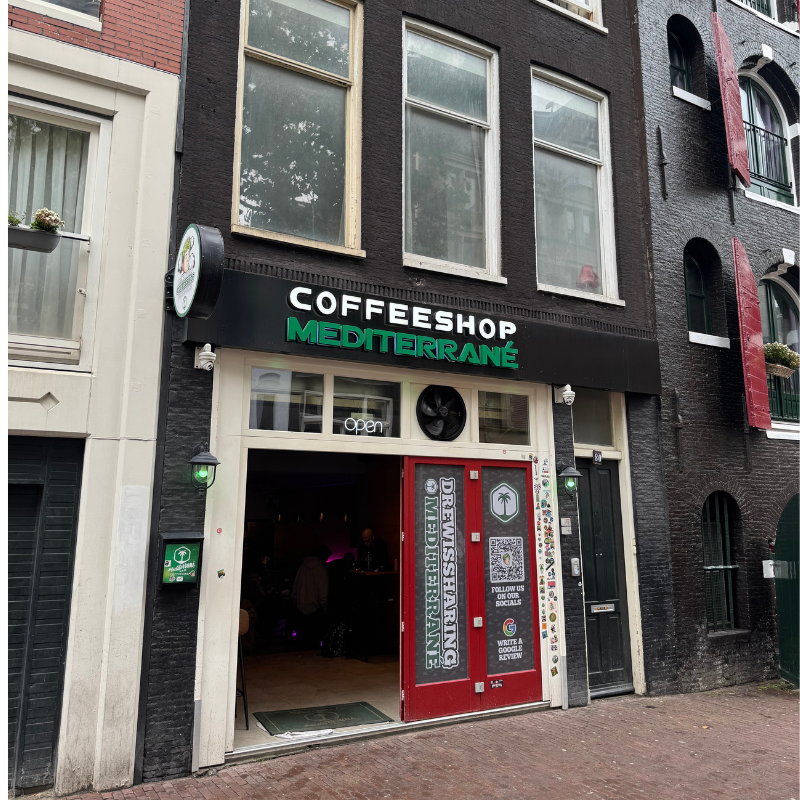
How the system works
Coffeeshops in the Netherlands operate under a policy of tolerance (gedoogbeleid). Cannabis is technically illegal, but its retail sale to consumers is tolerated under strict conditions. This has created one of the world’s most recognizable cannabis markets — and one of its most paradoxical.
Key rules include:
- Maximum purchase: 5 grams per person
- No alcohol or hard drugs on site
- Strict municipal licensing
- Minimum age: 18
- No advertising
The biggest contradiction is the so-called “backdoor problem”: while sales are tolerated, cultivation and wholesale supply have historically remained illegal.
Average prices (2025)
- Standard flower: €12–16 per gram
- Premium strains: €20–50 per gram
- Hash: €15–25 per gram
Prices reflect high overhead costs, including rent, licensing, security, taxes, and supply risk.
Pros of the Amsterdam model
- Immediate public access for locals and tourists
- High customer turnover and cash flow
- Strong city branding and cannabis tourism
- Clear retail experience and standardized service
Structural drawbacks
- Legal inconsistency between retail and supply
- Heavy dependence on tourism
- Increasing political pressure and shop closures
- Limited product traceability
Spain’s Cannabis Social Clubs

How cannabis clubs operate
Spanish cannabis clubs are based on the concept of private collective consumption, protected indirectly by constitutional rights to association and privacy, and reinforced by regional jurisprudence.
They are non-profit associations, not retail businesses.
Core characteristics:
- Access limited to registered members
- Collective cultivation for internal consumption
- No advertising or storefront sales
- Members make “contributions,” not purchases
Average prices
- Standard flower: €6–12 per gram
- Premium genetics: €12–18 per gram
- Extracts: €20–50 per gram
Lower prices are possible due to the absence of classic retail margins and intermediaries.
Pros of the Spanish model
- Strong quality control and traceability
- Community-based and harm-reduction oriented
- More affordable pricing
- Less tourism pressure
Structural drawbacks
- Constant legal uncertainty
- Police raids and inconsistent court rulings
- Limited scalability as a business model
- Restricted access for non-residents
Head-to-Head: Key Differences
| Factor | Amsterdam | Spain |
|---|---|---|
| Market type | Public retail (tolerated) | Private associative |
| Access | Open to public | Members only |
| Tourism | Very high | Moderate |
| Prices | Higher | More affordable |
| Legal clarity | Politically tolerated | Jurisprudence-based |
| Scalability | High | Limited |
| Global image | Cannabis capital | Alternative model |
The European Cannabis Market Rivalry
While Amsterdam and Spain do not compete directly in legal terms, they compete for influence, legitimacy, and investment.
Amsterdam represents visibility, branding, and tourism economics. Spain represents discretion, community, and decentralized production. Each model appeals to different stakeholders — from city governments and investors to consumers and activists.
Recent developments intensify this rivalry:
- The Netherlands has launched pilot programs for regulated cultivation
- Spain continues to debate national and regional cannabis legislation
- Germany and other EU countries study both systems as policy references
Europe is watching itself evolve.
What the Global Cannabis Industry Can Learn
1. Incomplete regulation creates parallel markets
Both systems prove that demand will be met regardless of legal perfection. Gray markets thrive when regulation lags behind reality.
2. Market design shapes consumer behavior
Retail models encourage fast, tourist-driven consumption. Associative models promote slower, community-focused use.
3. Price and access matter more than ideology
High prices push consumers to informal markets. Closed systems limit growth and innovation.
4. Europe needs a hybrid model
The future likely lies in combining:
- Licensed retail access
- Regulated cultivation
- Membership or consumption controls
- Education and harm-reduction policies
Experiencing Both Models Firsthand
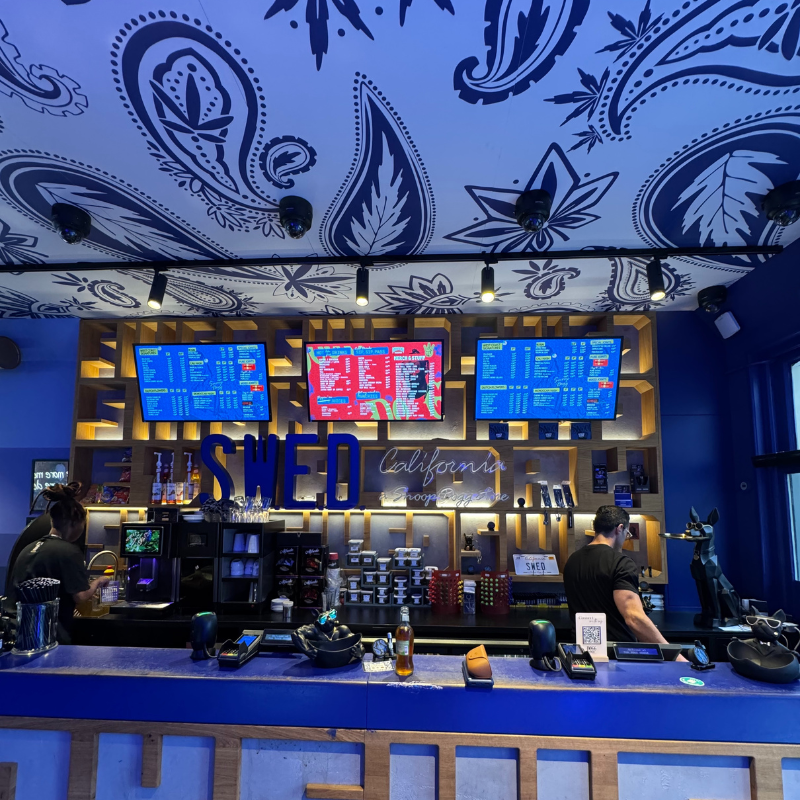
Beyond regulation and theory, experiencing Amsterdam and Spain firsthand reveals how differently these cannabis models feel in practice — especially in terms of quality, pricing, social dynamics, and comfort.
Quality vs Price: A Clear Contrast
In Spain, flower quality stands out immediately. High-quality cannabis is commonly available at €10 per gram, often with better terpene profiles and freshness than similarly priced options in Amsterdam.
In Amsterdam, while prices range widely, many flowers priced at €7–8 tend to be lower quality. Premium flower exists, but at noticeably higher prices. Additionally, tourists should be cautious with products labeled “mix”, which often contain tobacco — something that surprises many first-time visitors.
Spanish clubs, by contrast, offer excellent pre-rolls starting at €5, often made with pure flower and no tobacco.
Community vs Tourism
Spanish cannabis clubs feel local. Members often interact with residents, staff, and long-term community members. Many clubs offer spacious lounges, game areas, and comfortable seating, creating an environment designed to stay, connect, and relax.
Amsterdam coffeeshops are far more tourist-driven. While iconic, most interactions happen between travelers, and the experience is typically shorter and more transactional.
Membership vs Open Access
Spain operates on a membership model:
- Annual or one-time fees usually range from €10 to €20
- Some clubs do not accept new members
- Others require invitation or recommendation
This creates exclusivity but also strengthens community trust.
Amsterdam, on the other hand, offers open access. Anyone over 18 can enter most coffeeshops freely, though some prohibit filming or photography.
Consumption Culture: Bring-Your-Own vs In-House
In Spain, it is common — and accepted — to bring your own food and sometimes non-alcoholic drinks. Some clubs feel closer to private lounges than commercial venues.
In Amsterdam, consumption is more often tied to food and drinks purchased on-site, reinforcing the retail café model.
Events and Member Experiences
A major differentiator in Spain is community programming. Many clubs host:
- Member brunches
- Movie nights
- Cultural gatherings
- Themed experiences
These events reinforce loyalty and transform clubs into social ecosystems, not just consumption spaces.
Personal Recommendations (Visited Locations)
Spain
- Terpy (Barcelona)
- La Kalada (Barcelona)
- The High Class (Barcelona)
- Euphoria Club (Madrid)
Amsterdam
- 7 Heaven
- Coffeeshop Mediterrané
- Snoop Dogg Coffeeshop
- Cannabis Museum